Knowledge Graphs in the Era of Large Language Models
A monthly series of talks and tutorials with leading researchers on how knowledge graphs and language models can strengthen each other.
Programme
Building Your First Knowledge Graph with Neo4j

University of Galway, Ireland
This one-hour tutorial offers an introduction to knowledge graphs, covering their core concepts, structure, and real-world applications. Participants will learn how entities and relationships are represented as nodes and edges, and why knowledge graphs are powerful for organising and querying connected data. The session concludes with a hands-on demonstration in which a small knowledge graph is built using Neo4j.
Prerequisites: No prior experience with graph databases is required. Participants are kindly asked to create a free Neo4j Aura account before the tutorial.
About the speaker
Jamal Nasir is a Lecturer in Computer Science at the University of Galway, where he previously held a postdoctoral position at the Data Science Institute. He received his PhD in Computer Science from the Lahore University of Management Sciences. His work spans text mining, natural language processing and knowledge-based semantic methods, and he currently contributes to the Horizon Europe project AI4Debunk on AI tools against disinformation.
Verbalising Knowledge Graphs into Multiple Languages
CNRS / LORIA, Nancy, France
Unlike machine translation, which mediates between two natural languages, knowledge-graph-to-text (KG2T) generation requires converting structured input into natural language. The talk opens with an introduction to the WebNLG challenges and datasets, which were created to build a research community around this topic. It then outlines the challenges of multilingual KG2T generation and presents several methods the speaker and her colleagues have proposed for verbalising knowledge graphs into high-, medium- and low-resource languages. Time permitting, the talk will also address evaluation, introducing metrics designed to assess the semantic faithfulness of the generated texts.
About the speaker
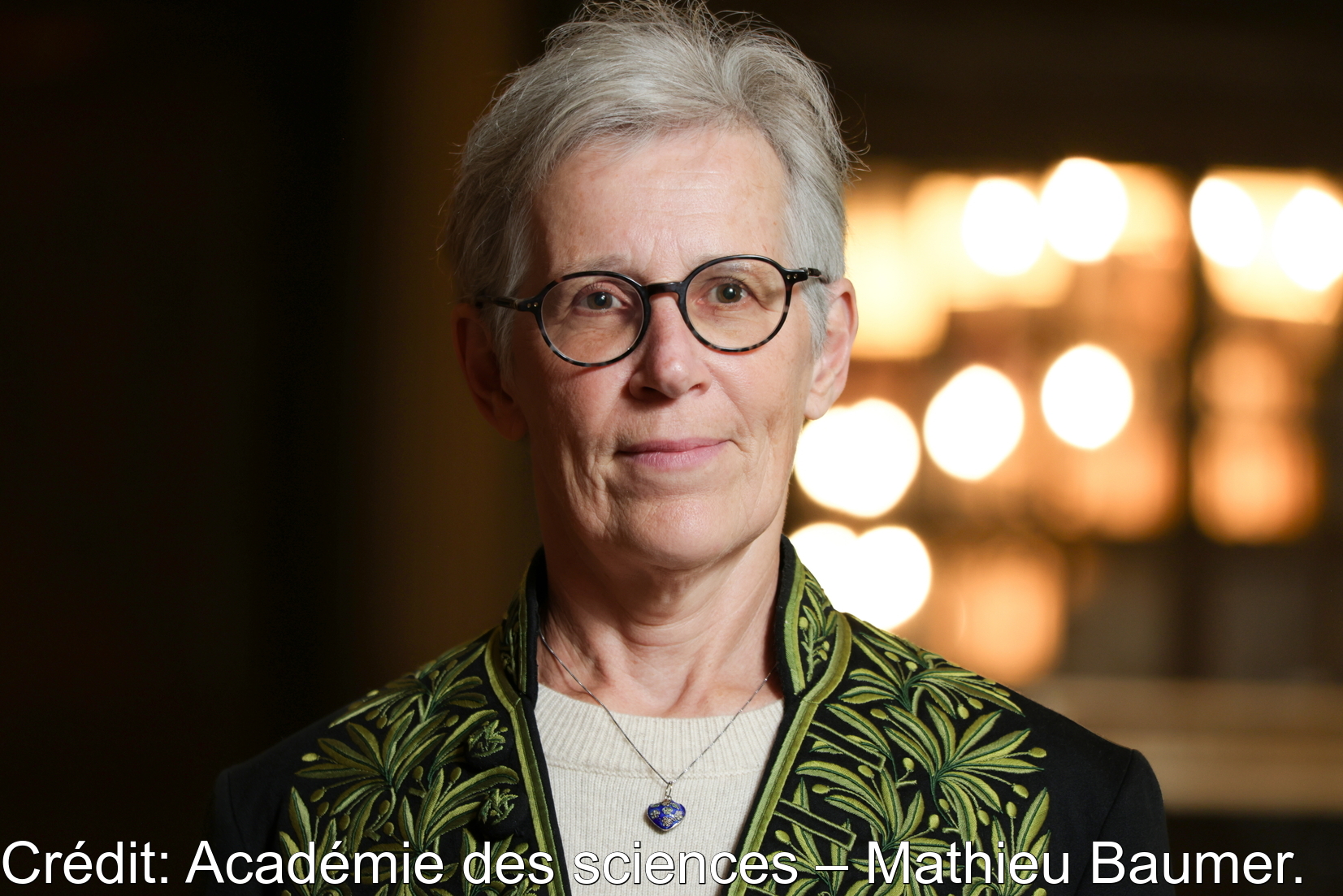
Claire Gardent is a senior research scientist at the French National Centre for Scientific Research (CNRS), based at LORIA in Nancy. Her research focuses on natural language generation; in 2017 she initiated the WebNLG Challenge on generating text from knowledge graphs, and she now leads the AI ENACT Chair on faithful and trustworthy generation. She received the CNRS Silver Medal and was named an ACL Fellow in 2022, served as General Chair of ACL 2024, and is a member of the French Académie des sciences.
The More You Know: Towards Knowledgeable Multilingual LLMs

Hasso Plattner Institute / University of Potsdam, Germany
Should LLMs really try to serve as oracles that possess all of the world’s knowledge? The speaker and his colleagues have investigated knowledge-less LLMs [1]: models that focus primarily on genuine modelling of language and reasoning, rather than allocating their parameters to memorising vast amounts of detailed factual knowledge about the world. This can be coupled with Query-Level Uncertainty [2] and other meta-cognition methods [3, 4], which enable a model to know whether a query requires external knowledge and how confident it is. Finally, the talk will discuss methods for adapting the vocabulary of a multilingual model to better capture language-specific terms [5, 6].
References
- Cohen, Carré, Lechtenbörger, Droste, Kerschke, Biswas, de Melo & Buys (2026). Knowledgeless Language Models: Suppressing Parametric Recall for Evidence-Grounded Language Modeling. arXiv:2607.12831. Link
- Chen, de Melo, Suchanek & Varoquaux (2026). Query-Level Uncertainty in Large Language Models. ICLR 2026. Link
- Cohen, Dobler, Biran & de Melo (2024). I Don’t Know: Explicit Modeling of Uncertainty with an [IDK] Token. NeurIPS 2024. Link
- Schall, de Melo & Smyth (2026). CONCORD: Label-Free Calibration of Verbalized LLM Confidence via Rollout Consistency. COLM 2026. Link
- Dobler & de Melo (2023). FOCUS: Effective Embedding Initialization for Monolingual Specialization of Multilingual Models. EMNLP 2023. Link
- Dobler, Elliott & de Melo (2026). Token Distillation: Attention-aware Input Embeddings for New Tokens. ICLR 2026. Link
About the speaker
Gerard de Melo is Professor and Chair of Artificial Intelligence and Intelligent Systems at the Hasso Plattner Institute and the University of Potsdam, and an ELLIS Fellow. He previously held faculty positions at Rutgers University and Tsinghua University and was a postdoctoral researcher at ICSI/UC Berkeley, after completing his doctorate at the Max Planck Institute for Informatics. He has published over 200 papers on AI, language models, multimodality and knowledge graphs, and co-authored the book Knowledge Graphs.
On Language Models and Knowledge Bases

Télécom Paris, Institut Polytechnique de Paris, France
Language models have brought major breakthroughs in natural language processing. Notwithstanding this success, the talk will show that certain applications still need symbolic representations, and how different methods, language models among them, can be harnessed to build such representations in the form of knowledge bases. It highlights several challenges in this endeavour, from finding good embeddings to improving entity linking and dealing with fallacies and textual entailment, and discusses how language models can be evaluated along several dimensions. The final part turns to the knowledge bases themselves, most notably the YAGO project, presenting work on detecting and alleviating incompleteness in knowledge bases, querying the data, using it for the digital humanities, and reasoning about beliefs.
About the speaker
Fabian M. Suchanek is a full professor at Télécom Paris, Institut Polytechnique de Paris, where he works in the Data, Intelligence and Graphs (DIG) team. During his PhD at the Max Planck Institute for Informatics he developed YAGO, one of the largest public knowledge bases, which earned an honourable mention for the SIGMOD dissertation award and, a decade later, the Test of Time Award of The Web Conference 2018. His research covers natural language processing, neuro-symbolic reasoning, information extraction, rule mining and knowledge graph management.
Photo: F. M. Suchanek, CC BY 4.0Title to be announced

Graphwise (Semantic Web Company), Vienna, Austria
The abstract will be published soon.
About the speaker
Artem Revenko is a researcher at the Semantic Web Company in Vienna, now part of Graphwise. His work focuses on combining machine learning with Semantic Web technologies, knowledge graphs and natural language processing, with publications on Semantic Web–machine learning systems and knowledge extraction.
Using Knowledge Graphs to Train LLMs

University of Ljubljana, Slovenia
The abstract will be published soon.
About the speaker
Marko Robnik-Šikonja is a Full Professor at the Faculty of Computer and Information Science, University of Ljubljana, where he heads the Laboratory for Machine Learning and Language Technologies. His research covers machine learning, natural language processing and the explanation of prediction models, with a current focus on large language models; his team has developed the large language models for Slovene. He has authored more than 250 publications.
DBnary: Turning 27 Wiktionary Language Editions into an Actionable Lexical Layer for Ontologies

Université Grenoble Alpes, LIG, France
Following a presentation of the DBnary dataset, the talk will discuss the availability of cross-lingual links within it and in several other Lexical Linked Data resources. This will provide insight into how such resources can be leveraged to develop multilingual ontologies or serve as a pre-built multilingual lexical layer for existing ontologies.
About the speaker
Gilles Sérasset is an Associate Professor in computer science at Université Grenoble Alpes and a member of the GETALP team at the Grenoble Informatics Laboratory (LIG). He works on multilingual computing, computational lexicography and linguistic linked open data, describing languages with Semantic Web standards such as OntoLex. He created and maintains DBnary, a large RDF lexical dataset extracted from Wiktionary.
Organised by & supported by
With the support of


This series is based upon work from COST Action CA24121 KGELL, supported by COST (European Cooperation in Science and Technology).